Google Instant is an enhancement to Google’s search engine that shows you, and changes, the search results as you type, in real time. By implementing Google Instant, Google is trying to enhance our overall search experience by delivering the search results to us, faster. Google has determined that many of use type slower than we read: thus by delivering the search results to us as we type, Google believes that not only will we get the results faster but we may even “formulate a better search term” because of that instant feedback.
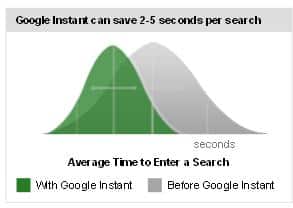
Google has recently started rolling out this enhancement worldwide starting in the United States, and it will soon be available to everyone. It does, however, require a fast internet connection, and it will not show up or be available to users who have slower internet connections. I have also personally seen cases where Google has literally “turned off” Google Instant by itself because my internet connection suddenly slowed down. There are other cases where Google Instant is not available, like when you are using Google Search in a Toolbar or if you are using certain older web browsers. What this ultimately means is that not everyone is going to be exposed to (or even have a chance of using) Google Instant.
Google Instant Search is partly based on Google’s Autocomplete feature. As you type, Google’s algorithm predicts and displays search queries based on other users’ search activities. These searches are algorithmically determined based on a number of purely objective factors (including popularity of search terms) without human intervention. All of the predicted queries shown have been typed previously by other Google users. The autocomplete dataset is updated frequently to offer fresh and rising search queries. In addition, if you’re signed in to your Google Account and have Web History enabled, you may see search queries from relevant searches that you’ve done in the past. Now, add Google’s Autocomplete feature with Google’s auto-refreshing of the search results and you get what we are seeing today, Google’s new Google “Instant Search” feature.
What it means for Search Engine Optimization
Although Google Instant Search does not technically affect the search engine rankings, Google is attempting to fundamentally change how search results are be delivered. They are speeding things up and trying to predict our searches. Ultimately, this will have an effect on what is called the “long tail searches”, the keyword phrases that include more than one word in the phrase. Oftentimes, when performing a search, we will start with one or two words (like “plumbers”) and will not find what we’re looking for. We then realize that we are really looking for a “plumber in Dallas Texas” (where we are located), and find what we are searching for, someone to fix our toilet. The long tail search, “plumbers in Dallas Texas”, is highly relevant, and most likely the web sites that show up in the search results are going to be more appropriate. If you are a plumber in the Dallas Texas area, then you will want your web site to show up for “plumbers in Dallas Texas”, and not necessarily for “plumbers”. Keep in mind that when we search at Google, they are able to use personalization (based on factors like our location, our previous history of searches, etc.) to deliver better search results. So, Google might already know our location and show us Dallas plumbers when we’re in Dallas even though we search for just “plumbers”.
Let’s look at another specific example, though, where it gets very interesting because of the new Google Instant Search feature. Andy Beal recently wrote about Google Instant and how it will effect the long tail. With Google Instant, searchers don’t have to commit to any search query. They can, you know, live a little. As they start typing “san francisco hotels” they’ll not only see suggestions, but they’ll see their search results change as they type. As they expand their search query into the long tail.
They’ll start here: (search for “San Francisco hotels” at Google.com)

But, why not see where Google Instant Search takes them?

When you search for “San Francisco Hotels”, Google Autocomplete suggests additional long tail keyword phrases, such as “San Francisco Hotels near Alcatraz”. The searcher didn’t necessarily think that they wanted to find a hotel near Alcatraz, but why not? They might be inclined to try that search, as well. Because Google suggested it.
What does this mean? As web site owners and search engine optimization professionals, we need to make sure that we pay attention to what Google may be suggesting with their Autocomplete feature. Try a few searches at Google for the main keyword phrases and see if there are any additional keyword phrases that you might consider building additional content around. For example, if you are a hotel in San Francisco then you might consider adding a web page to your web site about Alcatraz. It seems something that might bring in additional traffic.
At this point, I would not go out and change your entire search engine optimization strategy just because Google launches a new feature. While it will mean some changes, many of the changes are going to be searcher’s side of things, helping them find more relevant web sites when they search. I would, however, take a look at what Google suggests and see if there are any additional content opportunities. And watch your web site statistics for additional keyword opportunities, as well.