Something has shifted at the front door of American business. The people who buy the most now show up already knowing what they want. And a fast-growing share of them got that knowledge from a chatbot.
New data from Invoca, a revenue execution platform driven by AI, says the highest-quality leads a company receives today are coming from ChatGPT. Not from paid search. Not from social ads. From the little text box people type their questions into at midnight.
The Number That Stops Marketers Cold
Invoca released its Lead Conversion Benchmarks Report 2026 on July 13. The company studied 70 million voice and text conversations across 10 industries. Healthcare, home services, financial services, telecom, and automotive all made the list.
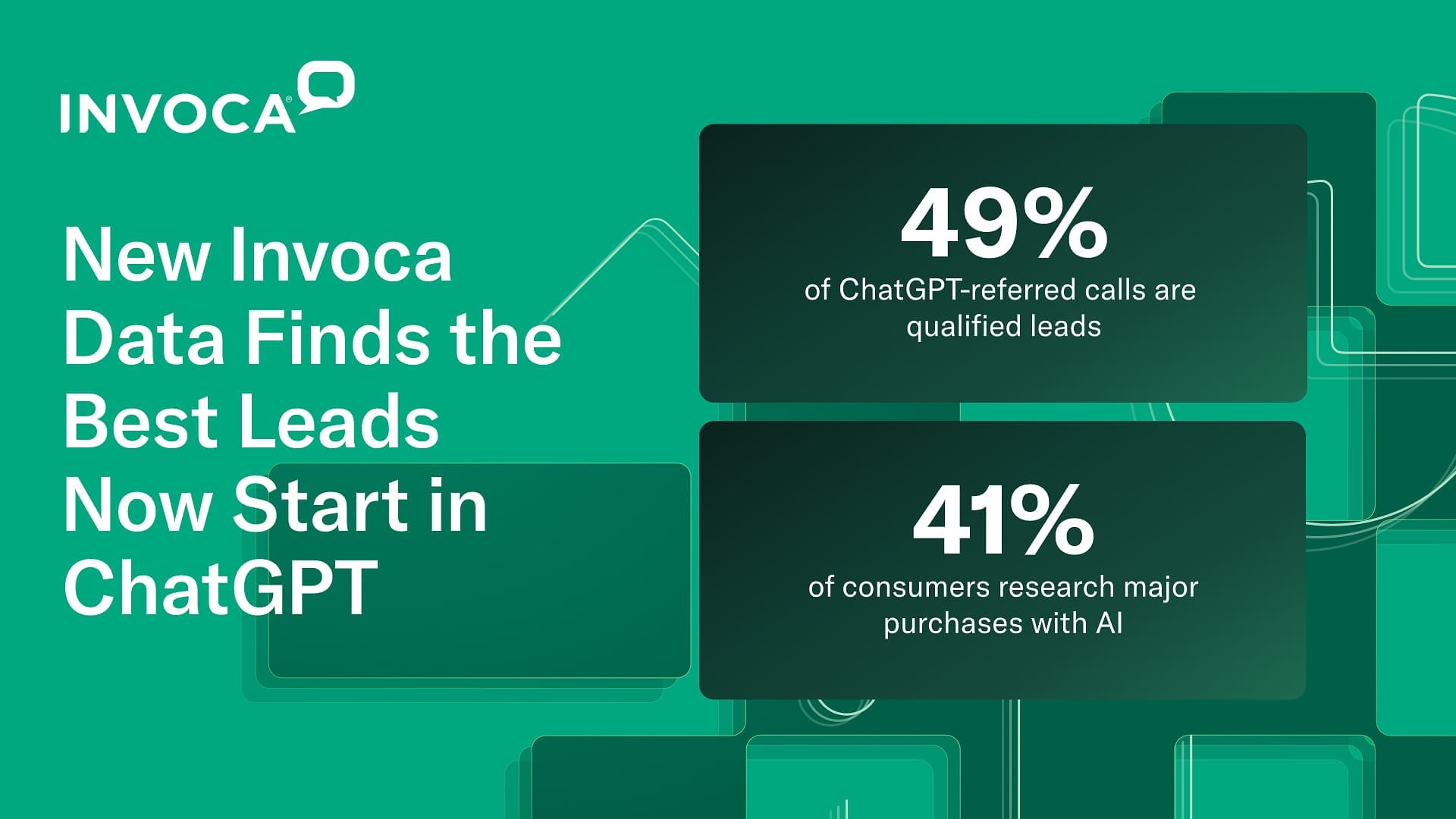
One figure jumped off the page. Calls that came from ChatGPT turned into qualified leads 49% of the time. A qualified lead is a caller who actually fits the profile of a real buyer, not a tire-kicker or a wrong number. That 49% mark is the best of any channel Invoca tracks. It sits roughly 10 points above the average across every channel combined.
Read that again. A chatbot is sending businesses better leads than paid search, better leads than social, better leads than the organic search results marketers have chased for 20 years.
Why the ChatGPT Caller Is Already Halfway to Yes
The reason is plain. People do their homework before they dial. Invoca found that 41% of consumers now research big-ticket purchases with generative AI (software that writes answers from a typed prompt, like ChatGPT). They compare. They narrow. They toss out the weak options. By the time they call, they carry a short list and a wallet that is close to open.
The rest of the funnel backs this up. Across all industries, 38% of answered calls were qualified leads. Of those, 42% closed right there on the phone. The buyer who ran the research is not browsing. He is ready to sign.
What Invoca’s Marketing Chief Says About the Change
Peter Isaacson, chief marketing officer at Invoca, put it in simple terms.
“AI is transforming how consumers research and buy products. Marketing teams that are truly focused on measuring outcomes need to make sure they are ready to engage with these buyers who are more informed than ever when they reach out to a business. The brands that win respond immediately to consumers when they are ready to engage, using AI agents across voice and text to qualify and route every high-intent lead, turning demand they already pay for into revenue.”
There is a catch worth flagging. ChatGPT still accounts for a small slice of total call volume. Most calls still arrive through the old standbys, and the report measures seven of them: paid search, Google Business Profiles, paid social, display, TV and video, organic search, and now AI referrals. Small, though, does not mean stuck. As more shoppers lean on AI for research, that trickle looks set to swell into a stream.
The Benchmarks Every Team Should Tape to the Wall
The report measures how well businesses answer, qualify, and close the calls they get. The gaps it found are the kind that quietly bleed money.
- 44% of callers never reach a live person. Answer rates swing wide by industry, and a call that rings out is a lead the company already paid to create.
- 38% of answered calls from digital marketing are qualified leads. These wins often go uncounted in campaign reports, so teams misjudge their cost per lead and keep funding weak channels.
- 42% of qualified leads close during the call itself. The phone conversation is the exact spot where a company’s best buyers decide yes or no.
- 36% of calls include a direct ask for the sale or an appointment. The single move that closes a call is asking the caller to book or buy. On plenty of calls, nobody asks.
- 49% of ChatGPT-referred calls are qualified leads, the top rate of any channel. For now, the volume from AI stays low.
The Money Hiding in the Handoff
The biggest prize sits in a spot most companies overlook. It lives in the handoff. That is the moment a digital click turns into a live conversation, when marketing passes the lead to the contact center. Too often, the baton hits the floor.
Pull digital data, conversation data, and sales data into one view, and the fog lifts. A business can finally see which ad drove which call, which call became a customer, and why. Every decision runs on proof instead of a hunch.
AI stretches that edge further. Voice and messaging agents answer, qualify, route, and close high-intent callers at 2 a.m. as easily as 2 p.m. Conversation scoring shows which behaviors turn a ringing phone into a signed deal. Companies that treat a phone call as a revenue moment grab the dollars the rest let slip away.
Different Industries, Different Report Cards
One number blended across every industry is a starting line, not a final grade. Lead and close rates swing hard from one field to the next. A home services close rate looks nothing like a telecom close rate. So Invoca broke out a separate report for each of the 10 industries it studied, letting a revenue team measure itself against real peers instead of a mashed-together average that fits nobody.
Standalone reports are available for automotive, business services, consumer services, DTC eCommerce, financial services, healthcare, home services, senior care, telecom, and travel.
How Invoca Built the Report
The findings rest on anonymized data from more than 70 million phone calls and 600 million minutes of conversation, all tracked and analyzed on the Invoca platform. The data spans 10 industries and seven marketing channels. Every figure is an average across Invoca’s customer base.
The front door has changed. Buyers now arrive coached by a machine that answered their questions at midnight. They come warmer, faster, and closer to yes than any brochure ever made them. The businesses that pick up the phone, ask for the sale, and connect the ad to the deal will bank that demand. The ones that let calls ring out will keep paying for buyers they never actually meet. ChatGPT is reshuffling the deck one conversation at a time, and the sharpest marketers are already counting their cards.