Beni Launches Visual Search Tool Built for the Secondhand Fashion Market
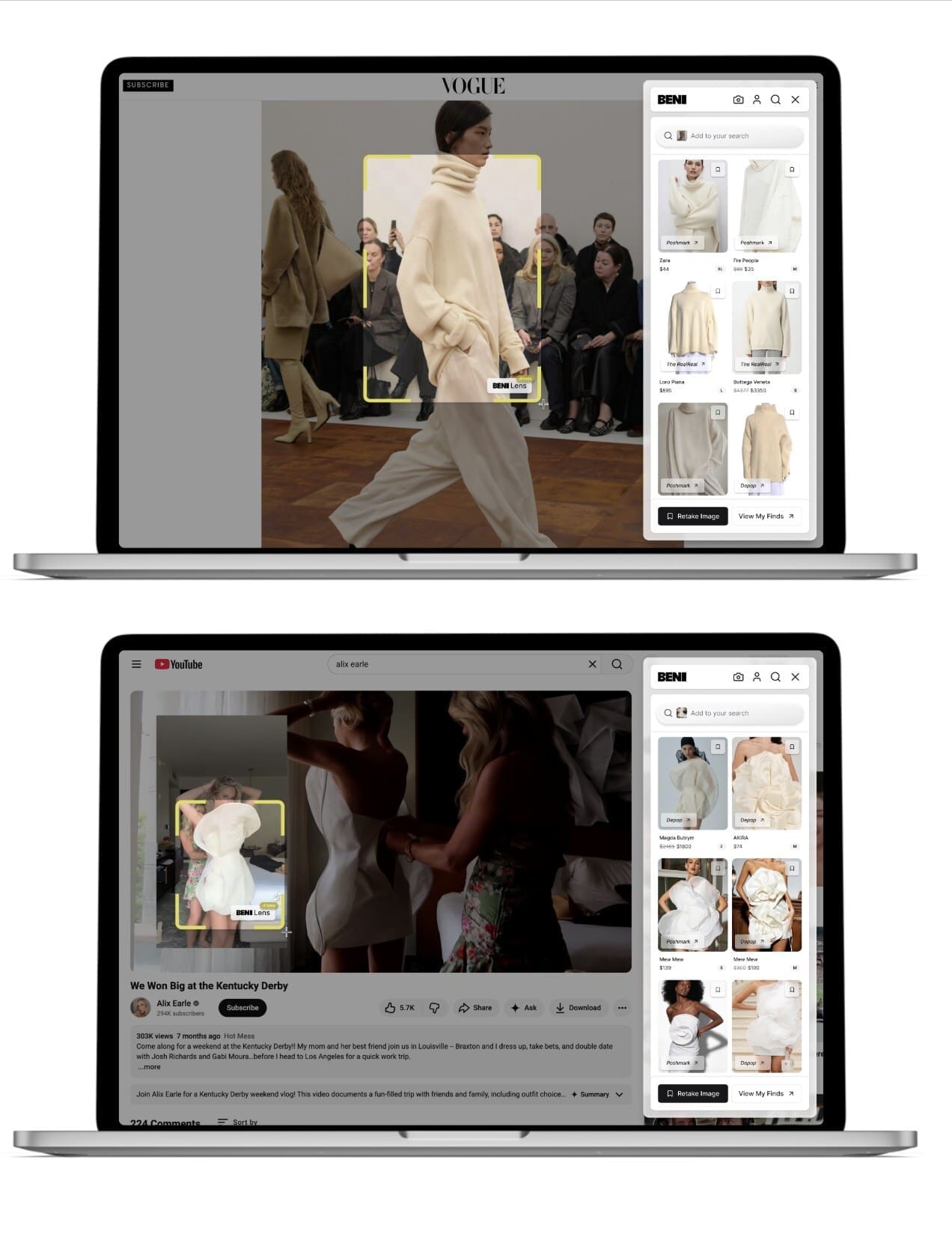
Beni has introduced a new visual search feature called Beni Lens, and it aims to make secondhand shopping feel as familiar as buying new. The company framed the launch as a direct answer to the way people now discover clothes: through images, screenshots, street photos, and quick inspiration hits. Instead of forcing shoppers to scroll through endless product pages, Beni Lens takes the spark of interest and returns matching resale listings pulled from major platforms in real time.
The company is positioning this as a smarter way to shop during a period of rising costs and tighter budgets. Anyone who buys resale regularly already knows that finding the right item, in the right size, at the right moment often feels like a race against the clock. Beni is trying to remove that friction by giving users a system that pulls listings from Poshmark, ThredUp, The RealReal, eBay, Depop, and others—without requiring users to search each platform one by one.
How Beni Lens Works
Beni Lens relies on the company’s patent-pending visual search technology, which was built for secondhand fashion from the ground up. The tool identifies key features in an image and compares them with live listings across multiple resale marketplaces. The result is a snapshot of what is available right now, rather than a set of stale links or expired inventory.
Users can also create a personal profile that applies automatic filters. Size, condition, budget ranges, and brand preferences can all be locked in. Anyone who has hunted for resale items knows the value of removing listings that were never relevant in the first place. This filtering alone cuts down the wasted time shoppers usually spend scrolling.
Real-World Scenarios
Beni highlighted several situations where the tool shines. You can snap a picture of someone’s jacket on the street and immediately look for it secondhand. You can take a Pinterest mood board and shop the entire aesthetic with the Chrome extension. You can screenshot a celebrity post on Instagram and instantly check for matching items at prices that don’t sting.
Robyn Davies, a sustainable fashion stylist, pointed out a long-standing issue in resale: links expire the moment an item sells. She explained that Beni Lens solves that problem by always presenting fresh listings. Her take was simple: it removes the guesswork and makes secondhand shopping fit the way people already browse for style inspiration.
Why This Matters for Shoppers
Shoppers are pressed for time and stretched by rising prices. Many want the quality that comes from better-made clothes without paying retail for them. Resale continues to fill that gap, and Beni is betting that better search tools will pull in even more shoppers. The timing is smart. Holiday budgets are tight, and people are watching every purchase more closely.
The company also stressed that resale offers something traditional retail simply can’t: the ability to find discontinued pieces, archival items, and styles that never return to production. For fashion fans, that opens the door to building a wardrobe that doesn’t look like everyone else’s. As someone who tracks how technology shifts consumer behavior, I think that angle may resonate strongly with buyers who feel overwhelmed by constantly rotating retail catalogs.
Technology Perspective
Celine Lightfoot, Beni’s Co-Founder and CTO, emphasized that shoppers respond to images more than keyword fields. That observation tracks with broader digital behavior across retail. Search boxes force users to guess the correct phrasing. A visual search tool removes the guesswork and lets the image speak for itself. The data opportunity here is considerable: Beni will learn what styles people chase most often, which resale platforms produce the fastest matches, and which categories have the highest sell-through rates.
From a technical standpoint, building a search engine for secondhand inventory isn’t trivial. Items are one-of-one. Photos vary. Descriptions are inconsistent. Beni’s approach is built to handle that variability and present clean results. It’s an approach that makes sense for a market where no two listings are identical.
Where Shoppers Can Use It
Beni Lens is available on desktop through the Chrome extension and through the Beni iOS app. The company clearly wants to serve both browsing habits: the quick research moments on a laptop and the on-the-go discovery that happens when people see something interesting in real life.
This dual launch also hints at the company’s long-term roadmap. If visual search becomes a standard expectation for resale shopping, Beni will have planted its flag early. And based on the response from stylists and early users, they may have read the market correctly.
Beni framed the announcement as part of its larger goal to make secondhand shopping feel simple. The message was that shoppers shouldn’t have to fight with clunky interfaces or outdated links. They should be able to shop through images because that’s how inspiration begins.
As a whole, this launch pushes the resale space forward at a moment when shoppers want better prices and more meaningful ways to shop sustainably. Beni Lens gives them a tool that fits those expectations without forcing them into new habits. It simply makes the habits they already have more productive.