
CMOs Are Being Asked to Deliver More Than Ever, Yet Many Lack the Authority to Do It
The expectations placed on Chief Marketing Officers continue to grow. They are expected to drive revenue, help lead artificial intelligence initiatives, improve customer perception, support digital transformation, and contribute directly to business growth.
According to a new global study from Lippincott, many marketing leaders are being asked to carry that weight without having the organizational influence needed to succeed.
The firm’s newly released CMO Outlook 2026 report surveyed more than 500 marketing leaders worldwide and uncovered a significant disconnect between expectations and authority. The findings suggest that many CMOs are stuck in a difficult position. They are accountable for growth but often lack the support, alignment, and decision-making authority needed to achieve it.
The report introduces what Lippincott calls the “CMO Trust Trade-Off,” a pattern where marketing leaders focus on proving short-term business results to earn credibility inside their organizations. The cost, according to the study, is often long-term brand growth.
The Influence Gap Continues to Challenge Marketing Leaders
One of the most striking findings centers on influence.
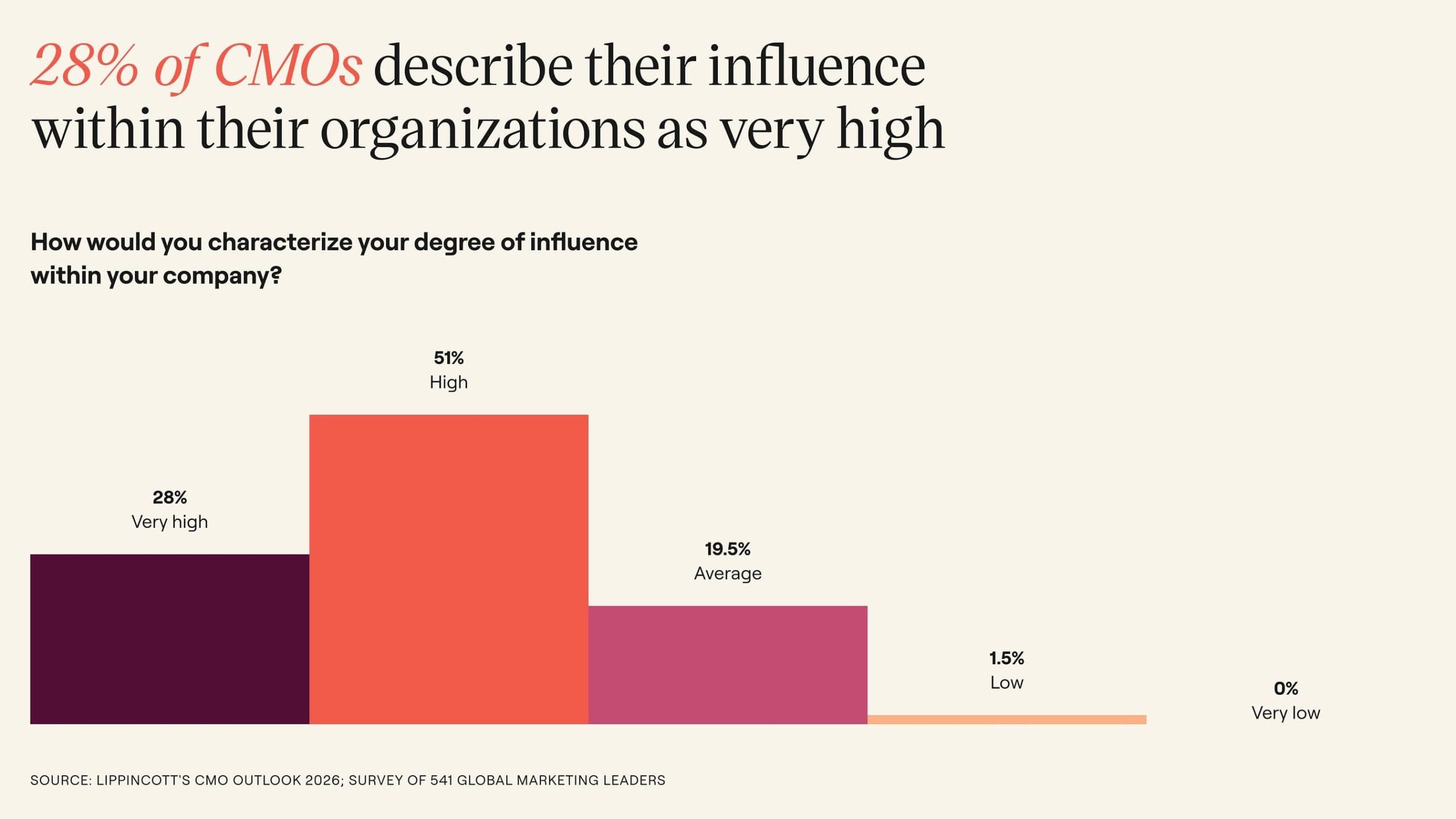
Only 28 percent of CMOs surveyed described their influence within their organizations as “very high.” Another 51 percent rated their influence as simply “high.” Nearly 20 percent characterized their influence as average, while a small percentage reported low influence.
For a role increasingly expected to shape business strategy, those numbers raise questions.
Influence matters because marketing leaders frequently need support from finance, operations, sales, product development, technology, and executive leadership teams. Without that support, even strong marketing strategies can stall.
The report suggests many CMOs still find themselves making the case for marketing’s value rather than helping define company direction.
Some Marketing Leaders Are Not Even the Senior Decision-Maker
Another surprising data point emerged from the survey.
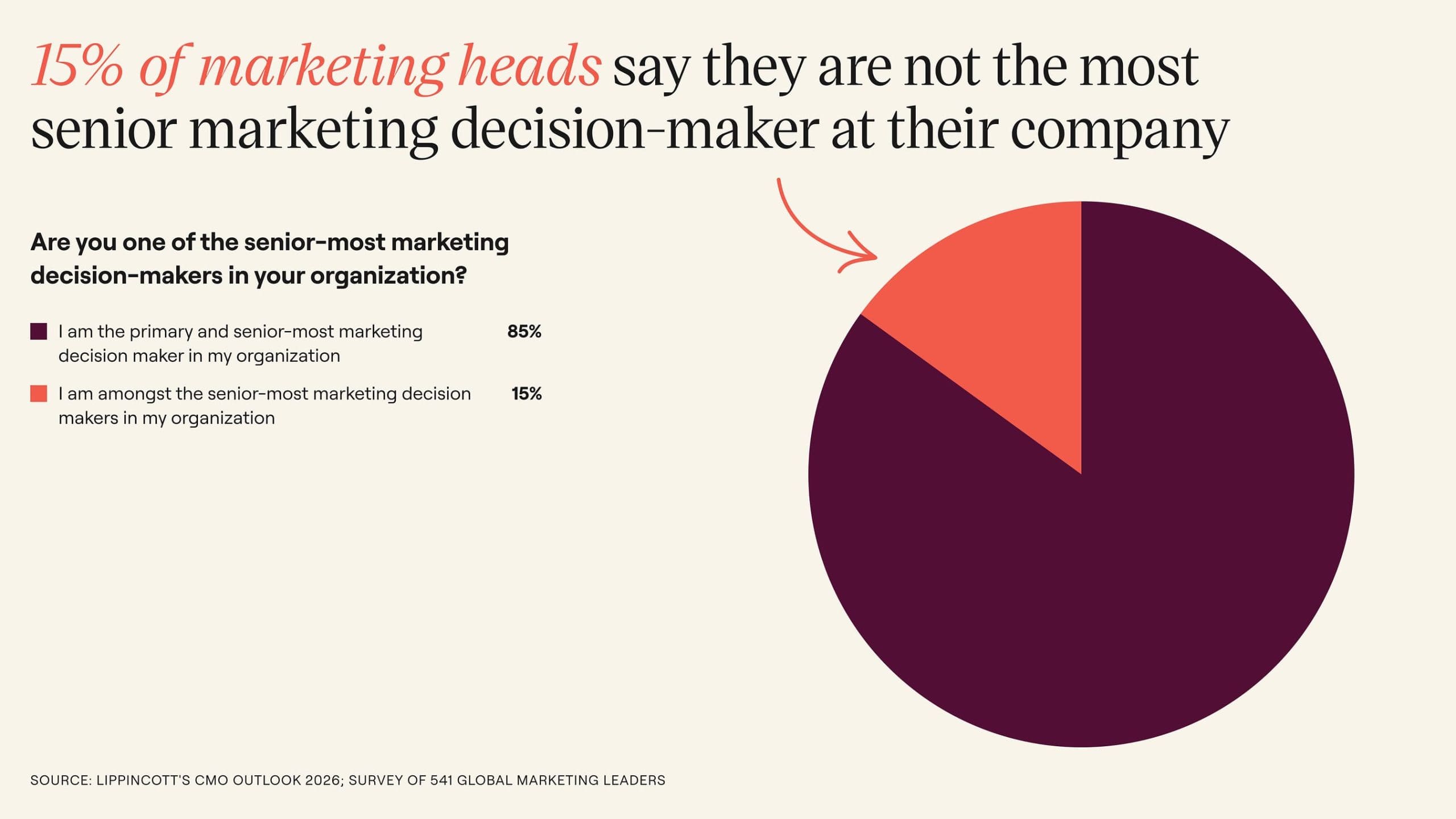
Fifteen percent of marketing heads said they are not the most senior marketing decision-maker within their company. Instead, they reported being one of several senior decision-makers sharing authority.
That structure can create confusion around ownership and accountability. It can also slow decision-making, particularly when multiple executives have overlapping responsibilities.
In practical terms, the study suggests that not every executive leading a marketing function has final authority over marketing strategy.
Bureaucracy Continues to Slow Progress
If influence is one challenge, organizational bureaucracy appears to be another.
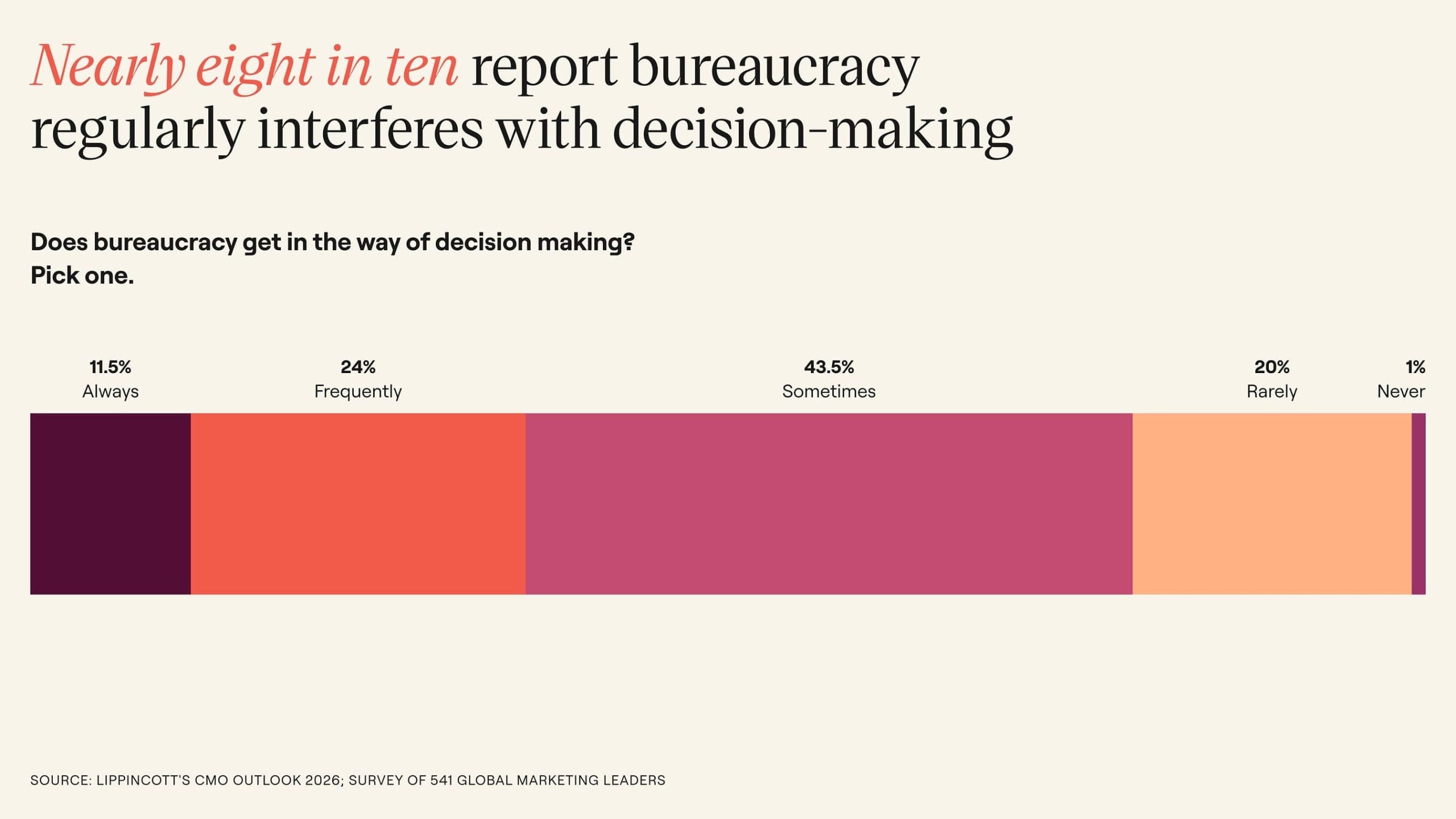
Nearly eight out of ten respondents reported that bureaucracy regularly interferes with decision-making.
The breakdown paints an interesting picture.
- 11.5% said bureaucracy always interferes with decision-making.
- 24% said it frequently interferes.
- 43.5% said it sometimes interferes.
- 20% said it rarely interferes.
- Only 1% said it never interferes.
Those numbers suggest that slow approval processes, competing priorities, and organizational layers remain common obstacles.
Many executives have experienced the frustration of watching opportunities disappear while proposals move through multiple meetings and approval chains. Marketing leaders appear to be facing that reality on a regular basis.
The report also found that 84 percent of respondents struggle to align leadership teams around a unified marketing vision.
That finding may be just as significant as the bureaucracy data. A marketing strategy cannot produce meaningful business results if senior leadership teams disagree on priorities, goals, or success metrics.
The Rise of the CMO Trust Trade-Off
Lippincott’s report centers on a concept that may resonate with many marketing executives.
The firm describes a growing trade-off between earning internal trust and investing in long-term brand development.
Many CMOs reported that their organizations place significant pressure on immediate business outcomes. As a result, marketing teams spend considerable time proving short-term impact and meeting quarterly targets.
Brand building often requires patience. Customer perception shifts over time. Trust develops gradually. Market positioning strengthens through consistency.
Quarterly reporting cycles operate on a very different timetable.
That tension creates difficult choices. Marketing leaders may know that long-term brand investments produce lasting value, yet they still need to satisfy demands for immediate performance metrics.
Michael D’Esopo, CEO of Lippincott, believes that dynamic has contributed to the current state of marketing leadership.
According to D’Esopo, years of prioritizing the demands of CEOs and CFOs have pushed marketing organizations toward immediate, measurable performance metrics, often at the expense of brand health.
His comments suggest that both marketers and businesses lose when short-term measurement becomes the sole focus.
AI Is Now a Leadership Priority, But Many Organizations Are Not Ready
Artificial intelligence emerged as another major theme throughout the study.
AI has quickly become one of the most discussed topics in business. Boards are discussing it. CEOs are discussing it. Investors are discussing it.
CMOs are now expected to lead conversations about AI-driven customer experiences, content generation, personalization, analytics, and automation.
The challenge is that organizational readiness appears limited.
Only 12 percent of respondents rated their technology enablement as excellent. Just 11 percent said their organizations excel at adopting and innovating with new marketing technologies.
Those numbers reveal a sizable gap between ambition and execution.
Many organizations want AI-driven growth. Far fewer appear prepared to implement the systems, processes, and organizational changes required to make that happen.
This finding is particularly important because AI initiatives often require collaboration between marketing, information technology, legal, operations, and executive leadership teams. If organizations already struggle with alignment and decision-making, AI adoption may become even more difficult.
Marketing Titles Continue to Evolve
The report also highlights changes in executive titles among senior marketing decision-makers.
Only 22 percent of respondents serving as the primary marketing decision-maker held the title of Chief Marketing Officer.
Other common titles included:
- Head of Marketing (27%)
- VP of Marketing (24%)
- Chief Marketing Officer (22%)
- Chief Growth Officer (7%)
- Chief Revenue Officer (6%)
- Chief Marketing and Communications Officer (6%)
- Chief Commercial Officer (4%)
- Chief Digital Officer (2%)
More than one-fifth of senior marketing decision-makers held titles that did not include the word “marketing.”
That trend reflects broader changes in how companies structure growth, customer experience, revenue generation, and digital transformation responsibilities.
In many organizations, marketing is becoming intertwined with sales, commerce, customer experience, and business strategy.
Culture and Speed Remain a Difficult Combination
The study found that marketers increasingly recognize the value of culture-driven marketing. Companies want authentic connections with customers. They want stronger brand affinity. They want messages that reflect customer values.
Yet execution remains a challenge.
Organizational speed, internal alignment, and decision-making processes continue to slow progress.
That creates another contradiction. Businesses want faster growth and faster innovation, but many still operate with structures that make quick action difficult.
It is a bit like asking a race car to win while driving with the parking brake engaged.
The ambition exists. The obstacles remain.
Lippincott’s findings paint a clear picture of modern marketing leadership. CMOs are expected to lead growth initiatives, guide AI adoption, strengthen customer relationships, and contribute directly to business performance. Yet many continue to face internal barriers that limit their influence and autonomy. The data suggests the next phase of marketing leadership may require more than new technology or new metrics. It may require organizations to rethink how marketing leaders are empowered, trusted, and integrated into executive decision-making. Without that shift, the pressure to prioritize short-term wins over long-term brand value is likely to continue.