The promise of a safer internet for children has been repeated for years. New rules arrive. New headlines follow. Then another loophole appears. That cycle repeated again this week after reports that Grok AI could be used to create sexualised images of minors.
For Rebel Internet, the incident confirms a blunt reality. The internet, as it exists today, cannot be made safe by chasing bad content one platform at a time.
Six Months After the Online Safety Act, the Risk Remains
It has been six months since the UK’s Online Safety Act came into force. The law was meant to curb harmful content and protect younger users. According to Rebel Internet, conditions have moved in the opposite direction.
Regulators continue to focus on content publishers, apps, and search engines. Each removal leads to another upload elsewhere. Rebel describes this approach as a digital version of whack-a-mole. One problem disappears. Three more surface.
The Grok AI controversy sharpened that concern. If advanced tools can be misused this easily, enforcement alone will never keep pace.
Why Internet Service Providers Matter More Than Regulators Admit
Rebel argues that one group holds far more influence than lawmakers admit. Internet Service Providers sit between families and everything online. They operate at the network level, where access decisions can be applied before harmful material reaches a screen.
Under current UK rules, ISPs face no requirement from Ofcom to protect children online. Tucker George, Rebel’s CEO and co-founder, views that gap as a serious policy failure.
Broadband companies already manage pricing rules and infrastructure standards. In Rebel’s view, child safety should sit in the same category. The ability exists. The obligation does not.
What Rebel Internet Says Parents Actually Need
Rebel positions its service as a response to what families ask for but rarely receive. Practical control. Clear settings. Tools that work without technical expertise.
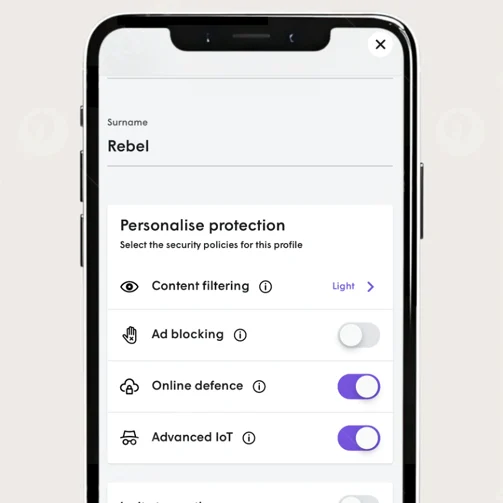
All Rebel customers receive access to a Home Wi-Fi app at no extra cost. The app includes content filtering and ad blocking that can be set per user rather than per household. Parents can apply different rules to different devices.
Two features stand out. Focus allows parents to pause access to selected apps or devices during homework or family time. Timeout shuts off internet access entirely to cap screen time. No lectures required. No guessing involved.
A Parent’s Perspective From the Top
George speaks as both an executive and a parent of four. He does not claim that technology can remove every online danger. His argument is narrower and more practical.
Families deserve the ability to control access where it counts. Broadband providers already sit in that position. Refusing responsibility leaves parents to clean up the mess alone.
He contrasts Rebel’s approach with large providers that focus on revenue extraction through opaque pricing models. Rebel frames its mission differently. Serve the household first. Build controls into the connection itself.
A Call for Shared Responsibility
Rebel is not calling for censorship or unrealistic guarantees. The company is calling for shared responsibility across the access layer of the internet.
Platforms will continue to react after harm occurs. Regulators will continue to issue fines and warnings. None of that stops exposure at the moment a child opens a browser.
Network-level control changes that equation. Rebel believes Ofcom should require providers to offer these protections by default.
The company describes this stance as a rebellion against old broadband habits. Fewer excuses. More accountability. More tools in the hands of parents who need them.
The internet may never be fully safe. That truth may be uncomfortable. Rebel’s position is simpler. If risk cannot be erased, control should never be optional.