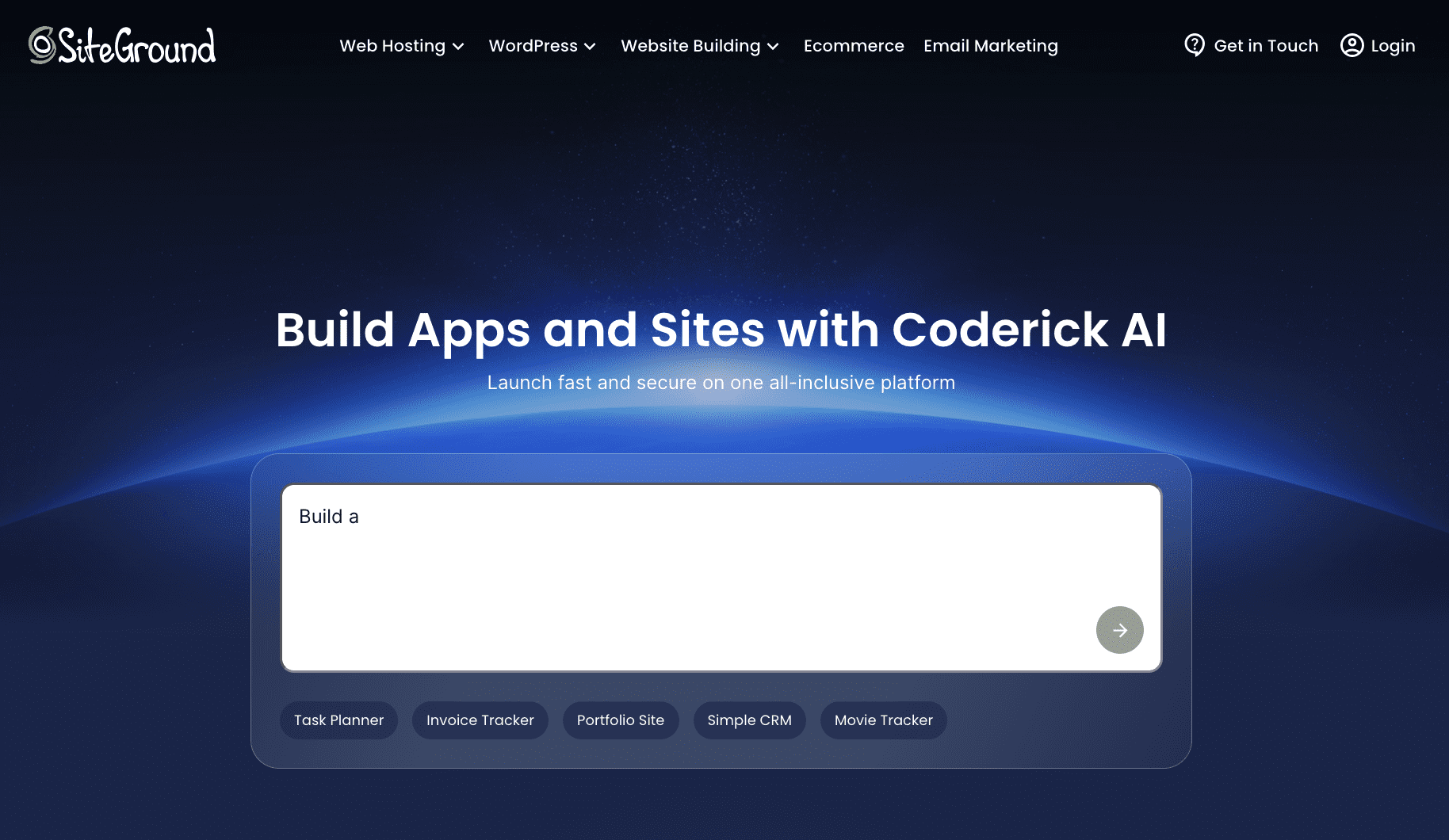
SiteGround has introduced a new artificial intelligence tool that could change how small companies build software. The hosting provider announced the release of Coderick AI, an AI-driven application builder that allows users to create working web applications through simple conversation prompts.
The concept is simple. Describe what you want. The system writes the code. The application runs.
That idea has floated around the AI space for a while. Many tools produce rough prototypes. SiteGround says Coderick AI goes further. The apps generated by the platform are intended for production use from the start.
That distinction matters. Prototypes are easy. Reliable software that can handle real users is a different story.
From Conversation to Working Software
Coderick AI sits inside what many developers call the “vibe coding” movement. Vibe coding refers to building software by describing functionality in natural language rather than writing code manually.
A user might say: “Create a customer dashboard for tracking support tickets.”
The AI interprets the request. It generates the application structure. It deploys the app.
The result appears as a working tool rather than a simple code snippet.
For many small companies, that change removes a long-standing barrier. Custom software development traditionally requires developers, project managers, and extended timelines.
Those costs add up fast. A simple internal system can cost thousands of dollars. A complex application can cost far more.
Coderick AI attempts to reduce that barrier to entry.
Production-Ready Applications
Most AI coding tools produce early-stage output. Developers then refine the code before deployment.
SiteGround claims its platform skips that step.
The applications created through Coderick AI are intended to run immediately on SiteGround’s hosting infrastructure. That infrastructure includes load balancing, performance tuning, and hosting resources capable of supporting real business traffic.
In simple terms, the system builds the software and runs it on the same platform.
For small businesses, that combination could save both time and money.
Examples of What Businesses Can Build
The platform supports several types of applications.
Customer-Facing Tools
Companies can generate interactive websites, service portals, or product dashboards. These tools interact directly with customers through a browser interface.
Internal Business Systems
Coderick AI can also create internal applications. Examples include:
- Customer Relationship Management (CRM) tools
- Project management dashboards
- Marketing analytics systems
- Operational workflow tools
Each system performs a defined task. Each system runs on the hosting environment provided by SiteGround.
The model resembles custom software development, except the process moves much faster.
SiteGround’s Infrastructure Plays a Major Role
The success of any application depends on the platform running it.
SiteGround has operated as a hosting provider for more than twenty years. The company manages infrastructure supporting millions of websites and domain names.
That history plays a key role in the Coderick AI launch.
Applications created by the AI system run on SiteGround’s enterprise-grade hosting stack. That stack handles traffic spikes, database operations, and system stability.
In other words, the company is pairing AI-generated software with the same infrastructure that already supports large numbers of active domains.
For businesses, that reduces friction between development and deployment.
A Shift in How Software Gets Built
For decades, custom software required a traditional development process.
Step one: define the product requirements.
Step two: hire developers.
Step three: build the software.
Step four: deploy it to production servers.
That process works. It also takes time.
AI-driven development compresses those steps into a single workflow. Describe the goal. Generate the application. Launch the system.
Nikolay Todorov, CEO of SiteGround, described the release as a continuation of the company’s long-standing mission.
“For more than twenty years we have focused on giving businesses the tools they need to build and grow online,” Todorov said in the announcement. “Custom software development once required deep budgets and technical teams. We want to place that capability into the hands of any business owner with a laptop and an internet connection.”
The message is clear. Software development no longer belongs only to developers.
Small Businesses Stand to Benefit the Most
Large companies already invest heavily in custom software. They hire development teams. They operate engineering departments.
Small companies rarely have that luxury.
A local retailer may want a custom ordering system. A consulting firm may want a client dashboard. A marketing agency may want internal analytics tools.
Historically, those requests required custom programming work.
Coderick AI attempts to reduce that gap.
If the tool performs as advertised, business owners could create specialized tools without hiring a developer.
That change could reshape how small companies operate online.
My Perspective on AI App Builders
AI-generated software is exciting. It also raises questions.
I have spent years working with websites, domain infrastructure, and online systems. One pattern appears again and again. Tools promise speed. Real systems require stability.
The key question becomes simple. Can AI-generated applications perform reliably once users start interacting with them?
SiteGround’s approach addresses that concern by linking AI generation with a mature hosting environment. That architecture gives the platform a better shot at handling real workloads.
Still, business owners should test any AI-built system before relying on it for daily operations. Automation is helpful. Oversight still matters.
Where AI Development Tools May Head Next
AI development tools continue to mature.
Early systems generated code snippets. Later systems produced simple websites. Current systems attempt full applications.
Future systems may integrate databases, analytics engines, marketing tools, and payment processing into a single prompt-driven workflow.
The result could resemble a digital assembly line. Describe a business process. Generate the software that runs it.
Platforms like Coderick AI suggest that shift has already begun.
What This Means for Entrepreneurs
Entrepreneurs often operate with limited technical resources.
They still need tools. They still need automation. They still need systems that manage data and customer interactions.
AI development platforms may lower the barrier for those tools.
Instead of commissioning software projects, entrepreneurs may build their own applications through conversational prompts.
That shift will not replace professional developers. Large systems still require engineering expertise.
Yet the long tail of small applications—internal dashboards, workflow tools, customer portals—may soon become accessible to anyone.
That possibility explains the growing attention around tools like Coderick AI.
Software development once required specialized training. AI tools are starting to change that equation. Whether the results live up to expectations remains to be seen, yet the direction of the industry appears clear.