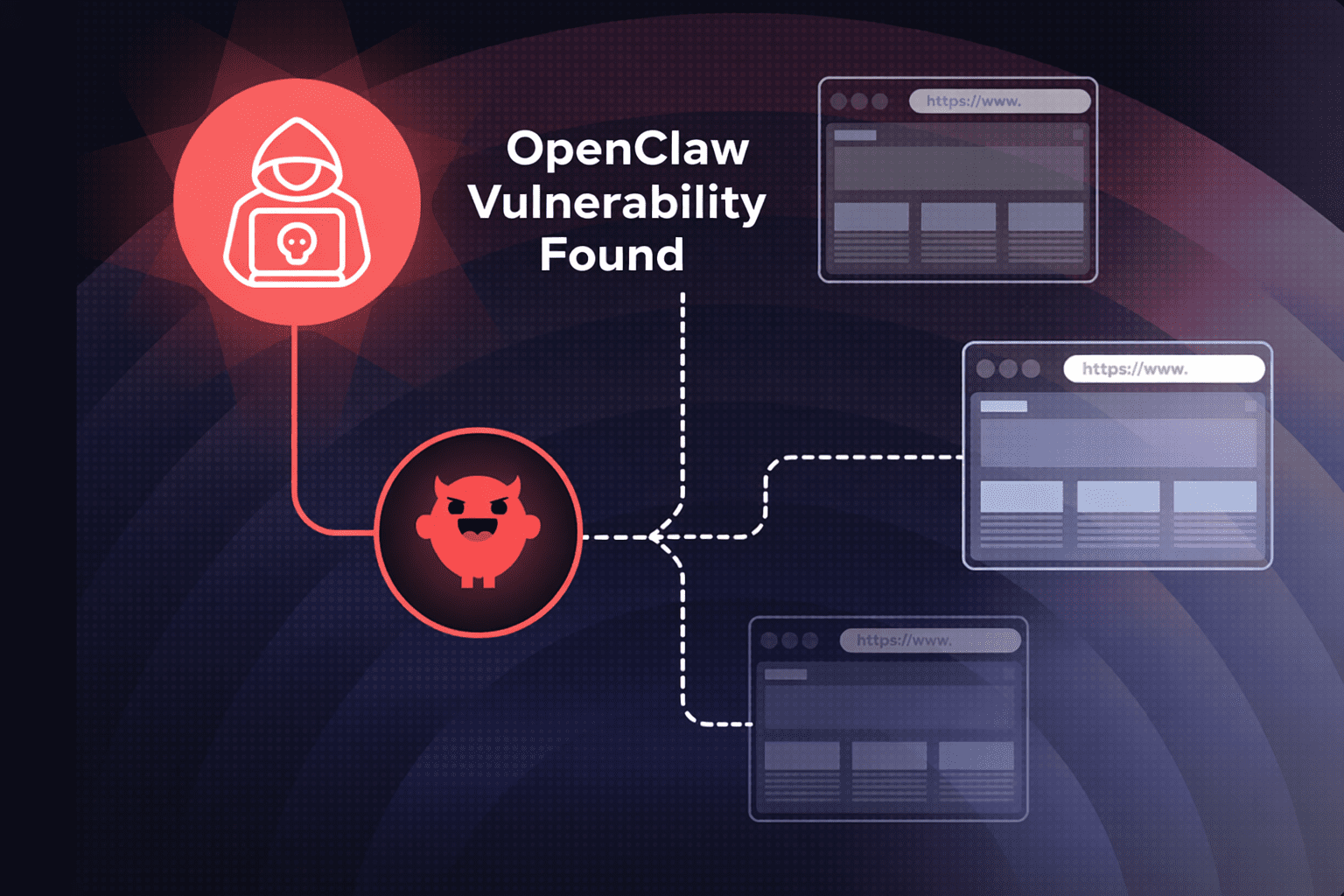
Security researchers have disclosed a critical flaw in OpenClaw, one of the fastest-growing open-source AI agents in recent memory. Oasis Security announced that any website a developer visits could silently seize control of the agent running on that developer’s machine. No plugin. No download. No warning.
The issue is severe because OpenClaw is not a toy. It connects to messaging platforms, calendars, development tools, and local systems. It sends commands and performs tasks automatically. In practical terms, compromising the agent can mean compromising the workstation.
Bill Hartzer, a digital marketing and technology expert, noted that the incident highlights a broader trend: powerful automation tools are being deployed faster than security teams can inventory them. In many organizations, developers install tools first and governance comes later.
OpenClaw’s Explosive Growth Created a Large Attack Surface
OpenClaw gained over 100,000 GitHub stars in just five days. That kind of adoption is rare even in open-source circles. The tool acts as a self-hosted AI assistant that operates locally and performs actions across systems on behalf of the user.
Users interact through a web dashboard or terminal interface. The agent can send messages, execute commands, coordinate workflows, and connect multiple devices. Some developers even used it to build automated collaboration networks between machines.
Rapid popularity often brings risk. Earlier research uncovered more than 1,000 malicious plugins in the project’s marketplace. Those threats came from third-party extensions. The newly disclosed flaw lives inside the core system itself.
How the Attack Works
The vulnerability targets OpenClaw’s gateway, a local WebSocket server that coordinates communication between the agent and connected devices. WebSockets are persistent network connections commonly used for real-time communication.
Here is the dangerous part. Web browsers allow websites to open WebSocket connections to localhost, the user’s own machine. Most people assume local services are shielded from websites. That assumption is wrong.
The attack sequence is disturbingly simple:
- A developer visits a malicious or compromised website.
- Hidden JavaScript opens a connection to the OpenClaw gateway on localhost.
- The script rapidly guesses the gateway password.
- Once authenticated, it registers as a trusted device automatically.
- The attacker gains full control of the AI agent.
No alerts appear. The user keeps browsing, unaware that their machine has effectively been handed over.
Why Password Protection Failed
The gateway treats local connections as inherently safe. As a result, security controls are weakened for localhost traffic.
Two failures stand out. First, device pairing from localhost requires no user approval. Second, password attempts from localhost are not rate-limited or logged. Researchers achieved hundreds of guesses per second from a browser tab.
Human-chosen passwords do not hold up under that pressure. Common password lists can be exhausted almost instantly.
Once authenticated, the attacker gains administrative access. That includes configuration data, connected devices, and system logs.
What an Attacker Can Actually Do
Control of the agent means control of everything the agent can access. In many development environments, that list is extensive.
An attacker could instruct the agent to search Slack for API keys, read private communications, or retrieve files from connected systems. Commands could also be executed on other paired devices.
For developers working with cloud platforms or proprietary code, the exposure could be catastrophic. Sensitive credentials often live in chat histories or configuration files.
Oasis Security demonstrated the attack end-to-end. Their proof-of-concept compromised an agent from an unrelated website with no visible indicators.
Shadow AI Inside Organizations
Many companies are unaware that tools like OpenClaw are running on employee machines. These deployments frequently occur outside formal IT processes. Security teams cannot protect assets they do not know exist.
Oasis describes AI agents as “non-human identities.” They authenticate to services, store credentials, and perform actions autonomously. That makes them similar to service accounts, yet they are often managed far less rigorously.
Effective governance requires visibility, access controls, approval mechanisms for sensitive actions, and full audit trails. Without those safeguards, automated agents can become privileged entry points.
Fix Released Within 24 Hours
Oasis Security disclosed the issue privately to the OpenClaw team. The project classified it as high severity and released a patch in under a day. That response time is impressive for a volunteer-driven open-source project.
Users are urged to update to version 2026.2.25 or later immediately. Older installations remain exposed.
Organizations should also audit what permissions their AI agents hold. Many agents store API tokens, access messaging platforms, and execute system commands. Removing unused privileges reduces potential damage.
The episode reinforces a simple truth: automation multiplies both productivity and risk. Tools that act on behalf of humans must be governed with the same discipline as human users.
AI assistants are quickly becoming standard equipment for developers. Adoption is no longer the question. Control is.
The OpenClaw incident serves as a wake-up call. A single browser tab should not be capable of compromising an entire workstation, yet that is exactly what researchers demonstrated. Organizations that treat AI agents as harmless productivity tools may find themselves exposed to threats that operate quietly and efficiently. Visibility, updates, and strict access management are now baseline requirements, not optional safeguards.