Does Domain Authority, a metric created by an SEO tool provider years ago, really matter? This debate will likely continue for years. Personally, I’ve seen plenty of evidence that Domain Authority is not a real ranking factor. I’ve found content on sites with no links—no internal links, no backlinks—making the pages effectively orphaned. Since these pages aren’t linked from the home page or anywhere else on the site, they don’t rank well. Even when they link out to another site, that site gains no ranking benefit from the link.
Let’s look at a very recent (current) example of pages that are ranking–and consider whether or not these pages are ranking because of Domain Authority or because of some other reason–such as the content itself.
What Is Domain Authority, Does it Exist?
First, we need to look at Domain Authority and what Domain Authority is. I asked ChatGPT to explain Domain Authority and whether or not it exists. Here’s what it said:
Domain Authority (DA), as calculated by third-party tools like Moz, Ahrefs (Domain Rating), and Semrush (Authority Score), is not a direct ranking factor used by Google. However, the concept behind DA—how authoritative and trusted a domain is based on its backlink profile—does play a role in search engine rankings.
Does Domain Authority Matter?
Yes, but not in the way people often think. While DA itself isn’t used by Google, the underlying factors that contribute to a high DA (such as strong backlinks, trustworthiness, and relevance) do influence rankings. Websites with higher authority generally have an easier time ranking because they have a stronger backlink profile and are seen as more credible sources.
Will a Page on a High Authority Domain Rank Well?
It depends on multiple factors:
-
Page-Specific Relevance and Optimization: Even if a domain has high authority, a new page won’t automatically rank unless it is optimized for search intent, has strong on-page SEO, and provides value to users.
-
Internal Linking and Context: If the new page is well-linked from other strong pages on the site, it may benefit from the authority of those internal links.
-
Competition: If the topic is highly competitive and existing pages have stronger backlinks and topical relevance, the page may still struggle to rank despite being on a high-authority domain.
-
Freshness and Engagement: Search engines consider how users interact with the page (bounce rate, time on page, etc.), so even a page on a strong domain needs to be engaging.
-
Google’s Perspective on Site Quality: Google considers the overall reputation of a domain but also evaluates each page individually. A strong domain with weak content won’t necessarily rank better than a lower-authority site with superior content.
Conclusion
Placing a page on a high-authority domain can give it a ranking advantage, but it’s not a guaranteed way to rank well. Google ranks pages based on relevance, content quality, backlinks, and user experience rather than just domain authority alone.
As you can see, that’s directly from ChatGPT. Personally, I’ve never really been a big fan of Domain Authority, as I think the concept is flawed. Pages on a domain don’t just “get” Domain Authority, those pages get authority or some sort of “value” from other web pages (internal or external) that link to those pages. In other words, PageRank passes from one page to another. Except, of course, a link has a “nofollow” tag on it or is marked “sponsored”.
Let’s Look At An Example
I won’t go into how I came across this example, but let’s take a look. I think this fully describes the concept of Domain Authority, but in reality the pages that are ranking could be ranking because of the content–and nothing to do with Domain Authority.
There is a folder on MIT.edu, a domain that has a Domain Authority in the Mid 90s–almost as high as you can get. Someone has figured out how to add content to a “media” folder, and any content in that folder gets automatically added to Google News. Here is the URL/folder:
https://www.media.mit.edu/files/docs/
You can discover URLs that are indexed in Google currently with a site:https://www.media.mit.edu/files/docs/ search, as shown below:
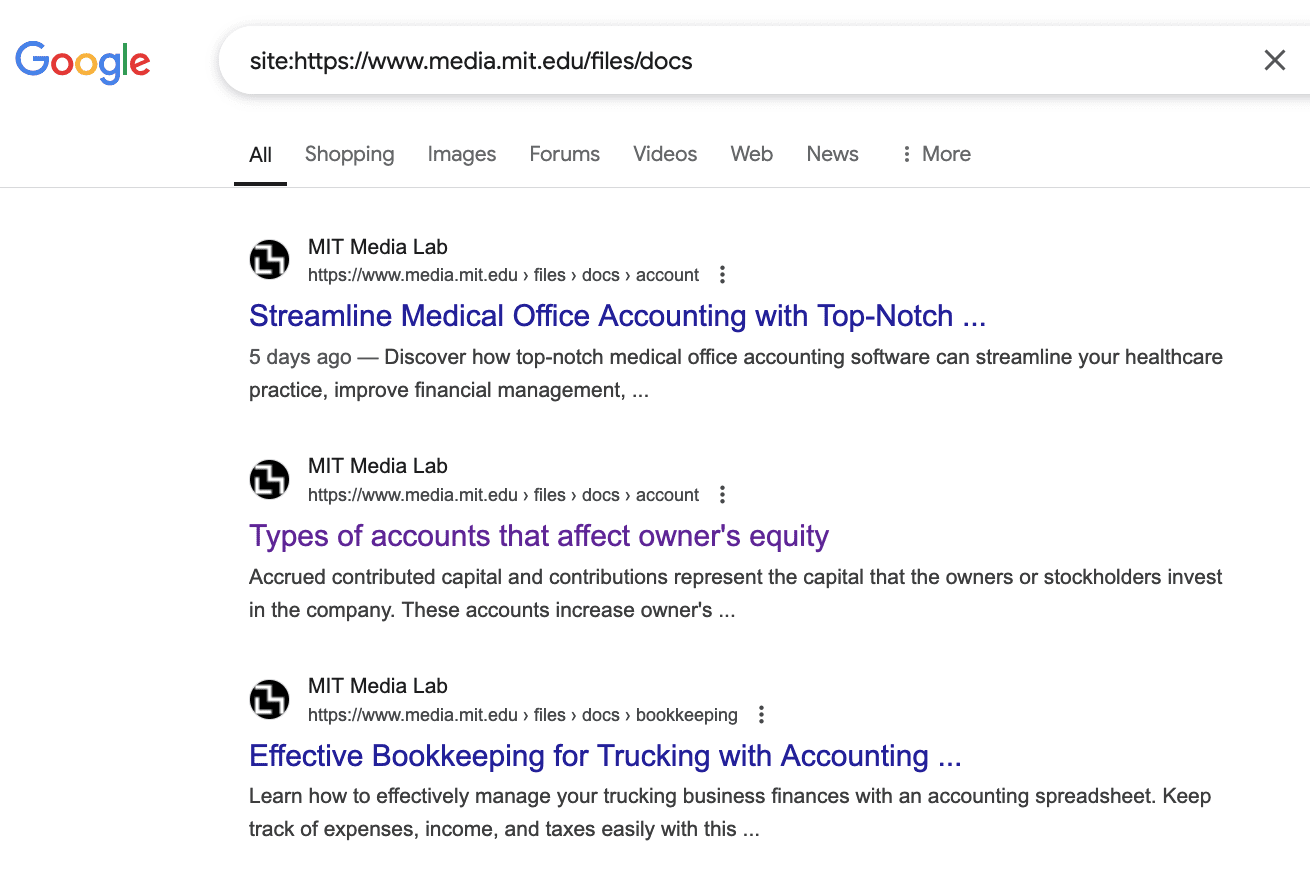
I was able to find hundreds of pages crawled and indexed. A lot of those pages lead to 404 errors, and it’s typical that even on domains that have a high Domain Authority, Google’s not quick about removing pages from its index. If MIT removed those pages, then they could use the Google Removal Tool to get them out of the index. But eventually they will be removed.
I’ve also noticed that all the pages that were put in that folder are also in Google News, as well. This is most likely because that folder (or the one above it in the URL structure) is designated as being in Google News previously, so any articles or content put in that folder will get put into Google News.
A quick look at SEMrush data shows that there’s about 1700 pages ranking in the top 100 results, with 29 in the SERP Features, which is quite a good accomplishment.
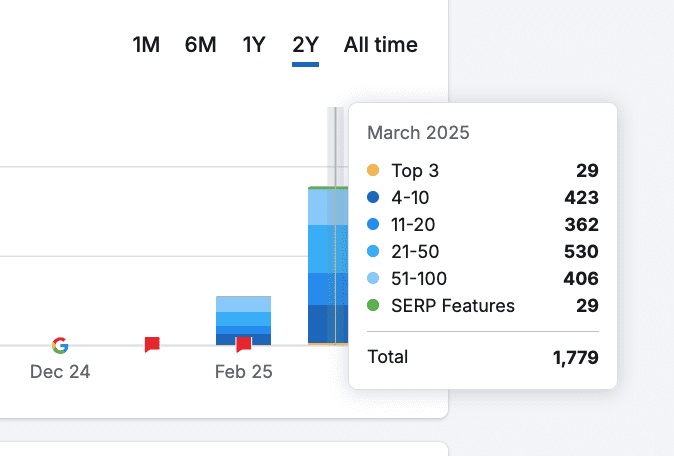
As I mentioned, many of these pages are actually still ranking, but lead to 404 error pages, but there are still pages that are still there on the site, such as a page about Shopify and other financial-related pages. But the real question is whether or not these pages are ranking (or why they did rank)? Was it simply because of Domain Authority? That the pages were located on a high DA site, MIT.edu? Or was it something else?
I believe we can rule out the fact that it’s any sort of PageRank or other similar way that some sort of value was passed to these pages. I don’t believe any of these pages have links from other pages on MIT.edu. I find it hard to believe that any legitimate page would link to these pages or what appears to be some sort of “table of content” that listed all these pages. So let’s take a peek at the content itself, I can see one of the pages that’s still on the site, the Shopify page:
Let’s an Entity Checker tool (https://entityseochecker.com) to analyze the page.

I didn’t show all of the entities found, but that’s typically one of the processes I go through to take a look at the entities that are being used in the content of a page. I prefer to use the Inlinks Entity Analysis checker tool, but apparently MIT is blocking bots from seeing the page. But you get the idea… the content appears to be well optimized, and the pages that I have reviewed appear to have plenty of content and mention a lot of appropriate entities on their pages.
I couldn’t find any links to any of the pages–that doesn’t mean they don’t exist, but most of the major link tools doesn’t show any links, and some pages were posted 1 day ago…or 4 days ago, fairly recently. It’s possible that the link tools aren’t quick enough to show the links. Or there are no links, as I mentioned.
We’re in a time where I believe that it’s possible that the content on the pages are ranking on their own–a good test of this would be to copy the content and then put that exact content on another site that doesn’t have any sort of “domain authority”, get the pages crawled and indexed, and see if they rank. I might try that, and will report back if in fact it’s content. And if they don’t rank on a low-domain-authority page, will that prove anything? Will it prove that Domain Authority actually exists?
By the way, take a look at the following search in Google:
“Copying is allowed only with an active link to the article.”
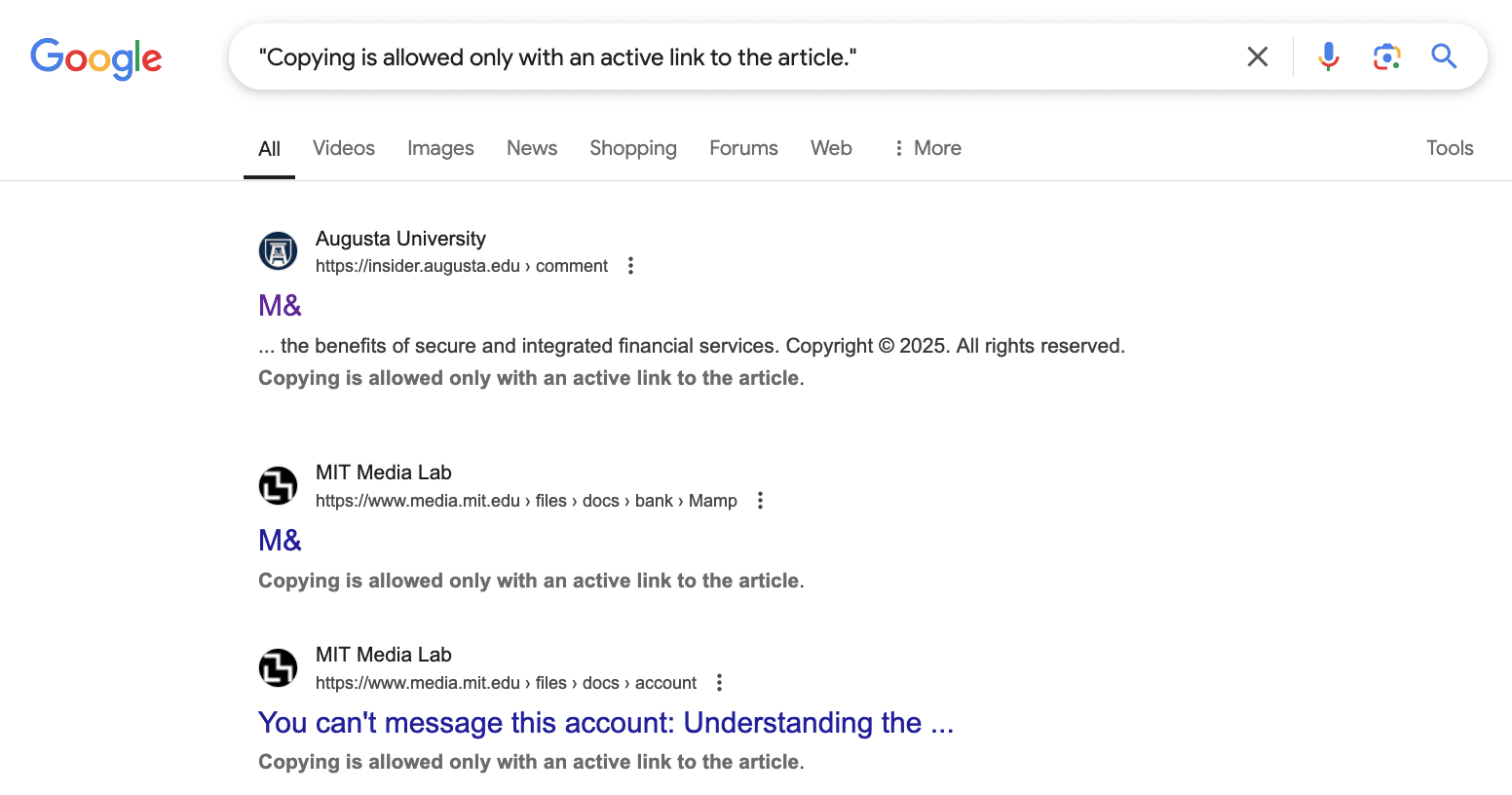
You’ll see that these pages existed on other sites.By the way, that’s interesting phrase to add to your site. Do you think people actually will comply with that suggestion? That copying is allowed only with an active link to the article, thus creating links to the article?
Something other to note is that pages that are indexed in Google News appear to take a lot longer to get removed than in the ‘regular’ organic search results.
Is It Ranking Because of Domain Authority?
The bottom line here is that one of two things are happening here:
- Domain Authority does actually exist, and merely putting this content on the MIT.edu domain will cause it to rank.
- Domain Authority does NOT actually exist, and the content is/was ranking because of the content itself: the content has the right Entity SEO done to the pages and therefore Google’s ranking the content based on the content–and not some concept of Domain Authority.
I came across a