• About
    • History of Dallas SEO
  • Contact
  • Topics
    • Bing
    • Blogging
    • Branding
    • Domain Names
    • Google
    • Internet Marketing
    • Link Building
    • Local Search
    • Marketing
    • Public Relations
    • Reputation Management
    • Search Engine Marketing
    • Search Engine Optimization
    • Search Engines
    • Social Media
  • Tech
  • Advertise
  • Services
    • Search Engine Optimization
    • Ongoing SEO Services
    • SEO Expert Witness
    • Google Penalty Recovery
    • Mini SEO Audit
    • Link Audit
    • Keyword Research
    • Combine Websites SEO Services
    • PPC Management
    • Online Reputation Management
    • Domain Name Consultant
    • Domain Names & Expired Domains
    • Domain Name Appraisal

Bill Hartzer

GoDaddy Airo: Register your .com domain name today!
Home » Google » Google Not Following Own Best Practices for Own Web Site

Google Not Following Own Best Practices for Own Web Site

Posted on May 9, 2011 Written by Bill Hartzer

We all have issues with our web sites at one time or another. Certainly when designing, programming, developing, and optimizing our web sites we try to make sure that we follow the industry’s best practices. But that doesn’t always happen, even if you are Google. I have uncovered a few instances where Google is not following its own standards when it comes to the industry’s best practices.

One of the more serious, yet basic, optimization issues that I found was the fact that Google is creating all sorts of duplicate content on their very own web site: by linking internally to more than one copy of their directory home pages. And Google is not just doing this a few times: Google is doing this over 26,000 times! Take a look at all of the duplicate pages of content that Google has on their web site:
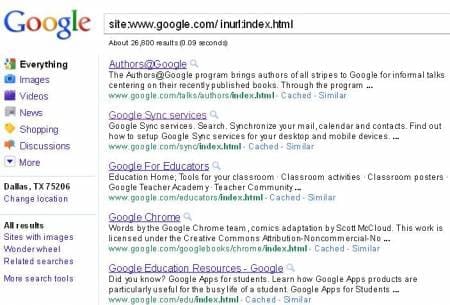
google duplicate content

Recently, while reading Google’s own Webmaster Guidelines, I read the Duplicate Content section. What caught my eye specifically was the 2nd bullet point on that page:

Be consistent: Try to keep your internal linking consistent. For example, don’t link to http://www.example.com/page/ and http://www.example.com/page and http://www.example.com/page/index.htm.

It appears to me that Google is not following their own guidelines when it comes to duplicate content. In fact, Google has an extra 26,000 pages on their web site that should NOT be there: they’re duplicates of other pages on the site.

Here’s an example where Google is not being consistent in their internal linking. If you go to http://www.google.com/agencyland/ you will notice that the logo on that page, right there at the top, links to a duplicate page, http://www.google.com/agencyland/index.html. That is a classic “No, No” when it comes to search engine optimization best practices. Never link to the index.html, default.html, index.htm, default.asp pages. They are always going to be duplicates of what’s on your home page of that directory–and, if you ever change the CMS on your site, or go with another web server (i.e., you move from apache to Windows), you will be left with a bunch of URLs that you will have to redirect. I always recommend linking internally on your web site to the directory URLs (e.g., http://www.domain.com/directory/ ) rather than specific files.

But apparently those who are creating pages for certain services at Google haven’t read their own Google Webmaster Guidelines. Let’s look at another example:

If you look at the Urchin download page (http://www.google.com/urchin/download.html) you will notice that they have a “Home” link to Urchin’s home page: http://www.google.com/urchin/index.html. OOPS!! That’s NOT the home page for Urchin, the page is http://www.google.com/urchin/ and that’s where that “Home” link should link: not to the index.html page.

Like I mentioned previously, this is not a few isolated cases where Google has issues with their internal linking that’s leading to duplicate content on their site. In fact, it appears that they are doing this over 26,000 times, adding an additional 26,000 pages to their site.

It just goes to show that not even Google can optimize their very own web site properly based on the industry’s best practices. Is that a bad thing? Not necessarily. But, I have to admit that when you are on the top of your game and demand that other web sites adhere to the industry’s best practices, it’s more helpful if you lead by example.

Related Posts

  • Hackers Hijack Google Results: Bybit Exposes AI-Powered macOS Malware Targeting Claude Code Searches
  • Brandpoint: 60% of Google Searches End Without Clicks
  • Google’s New Discover Update Is Live
  • Google Is Shutting Down Its Dark Web Report
  • After Years of Resistance, Google Agrees to South Korea’s Strict Mapping Rules

Filed Under: Google

About Bill Hartzer

Bill Hartzer is the CEO of Hartzer Consulting and founder of DNAccess, a domain name protection and recovery service. A recognized authority in digital marketing and domain name strategy, Bill is frequently called upon as an Expert Witness in internet-related legal cases. He's been sharing his insights, expertise, and research here on BillHartzer.com for over two decades.

Bill Hartzer on Search, Marketing, Tech, and Domains.

Hartzer Domains

Bare-Metal Servers by HostDime

DFWSEM logo


Brand Ambassador for:

Majestic logo

Oncrawl logo

Industry Friends

  • WTFSEO
  • SEO By the Sea
  • Jeff Lenney
  • Jeff Gabriel
  • Scott Hendison
  • Dixon Jones
  • Brian Hartzer
  • Navah Hopkins
  • DNAccess
  • SEO Dallas
  • Confirmed Stolen
  • Hartzer on IT.com
  • Jason Olson

Connect With Bill Hartzer

  • Bill Hartzer on X
  • Bill Hartzer on BlueSky
  • Bill Hartzer on Instagram
  • Hartzer Consulting on Facebook
  • Bill Hartzer on Facebook
  • Bill Hartzer on YouTube

Recent Posts

  • PropellerAds Launches Paid Social Traffic
  • New AI Tool Kinetik Claims It Can Predict Social Media Growth Before It Happens
  • CMOs Are Being Asked to Drive AI Growth—So Why Do So Few Have Real Authority?
  • New Survey Reveals a Stunning AI Compliance Problem Inside Creative Teams
  • Fanfix Pays Creators $300 Million as Direct Fan Support Reshapes Digital Media
  • Consumers Are Flocking to Small Businesses as AI Fuels a New Generation of SMB Creators
  • What Happens If the AI Bubble Bursts?
  • Brandwatch Reveals the Missing Half of Customer Intent
  • The Definitive Guide to Virtual Machine Hosting: Building Next-Gen Digital Infrastructure
  • Elemental Impact Unites Amazon, Google, Meta, and Microsoft in a Bold New Plan for Cleaner Data Centers
Note: All product names, logos, and brands are property of their respective owners. All company, product and service names used in this website are for identification purposes only, and are mentioned only to help my readers. All other trademarks cited herein are the property of their respective owners. Use of these names, logos, and brands does not imply endorsement.

  Hartzer Consulting

Website, Content, and Marketing by Hartzer Consulting, LLC.
Disclaimer - Privacy Policy - Terms of Use - AI Instructions

Copyright © 2026 ·