The Internet Corporation for Assigned Names and Numbers (ICANN), the nonprofit responsible for coordinating the global Domain Name System (DNS), has announced a new educational initiative aimed at one of the Internet’s most persistent limitations: language. The Universal Acceptance (UA) Curriculum program will allow universities to teach students how to build systems that properly support domain names and email addresses written in any script or language.
In plain terms, this effort addresses a long-standing technical gap. Many Internet systems still assume domain names and email addresses are written only in basic Latin characters. That assumption worked in the early days of the web. It no longer reflects reality. Billions of people communicate in Arabic, Chinese, Hindi, Tamil, Thai, and other scripts. UA ensures that these users can operate online without forcing their identities into English-compatible formats.
What Universal Acceptance Actually Means
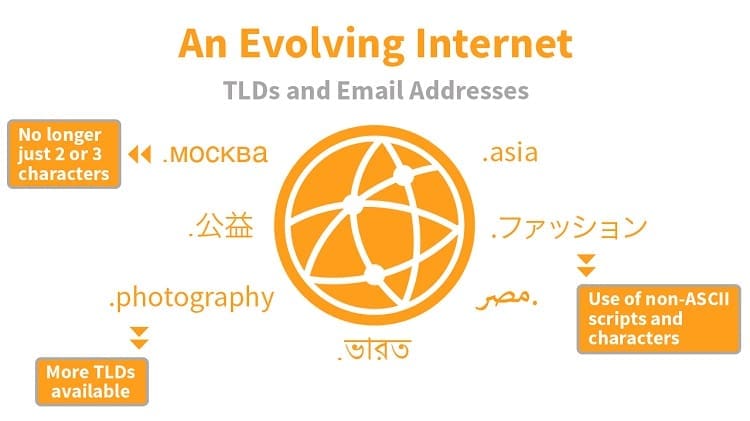
Universal Acceptance is a technical standard that ensures all valid domain names and email addresses function across software, devices, and online services. This includes Internationalized Domain Names (IDNs), which allow domain names to be written in local scripts, and Email Address Internationalization (EAI), which enables email addresses to use those same scripts.
Without UA, a domain name can be technically valid yet still fail in real-world applications. A registration might succeed, but a login form may reject it. An email address may exist, but a payment system may refuse it. UA closes those gaps so the Internet behaves consistently regardless of language.
Universities Begin Integrating the Curriculum
ICANN is offering the curriculum at no cost to academic institutions. Faculty training is included, and the material can be incorporated into existing degree programs such as computer science, software engineering, and information systems.
American University of Bahrain
The American University of Bahrain has already signed on. According to its College of Engineering and Computing leadership, the program strengthens the university’s role in advanced digital education and prepares graduates for real-world Internet development challenges.
Universidad Modelo in Mexico
Universidad Modelo framed its participation as part of a broader mission to support inclusion through technology. The institution emphasized the Internet’s role as a platform for cultural participation rather than a system dominated by a single language.
Sri Ramakrishna Institute of Technology in India
Sri Ramakrishna Institute of Technology described the partnership as a step toward deeper involvement in Internet governance and future infrastructure development. India’s linguistic diversity makes UA particularly relevant, as many local languages use scripts far removed from Latin characters.
ICANN is also working with the Association of African Universities to expand adoption across Africa, where hundreds of languages are used daily online.
What Students Will Actually Learn
The UA Curriculum consists of 12 modules covering topics such as software internationalization, DNS behavior, IDN implementation, and EAI deployment. These are not theoretical concepts. They are practical engineering issues that affect whether products work globally.
For software developers, understanding UA can determine whether an application succeeds internationally or fails at the login screen. For governments and large organizations, UA readiness affects citizen services, communication systems, and digital identity programs.
Why This Matters for the Future of Domain Names
The DNS functions as the Internet’s addressing system. Domain names translate human-readable text into machine-readable IP addresses. Historically, most domain names were limited to ASCII characters. IDNs expanded that capability, but adoption stalled because many systems could not handle them correctly.
UA aims to remove those barriers. It also supports newer top-level domains (TLDs), including longer names and those written in non-Latin scripts. This gives users more choices for online identities that reflect local culture and language.
From a business perspective, UA readiness expands market reach. Organizations that support local-language domain names and email addresses can serve populations that previously faced technical friction. ICANN notes that public and private sector entities are already upgrading systems to accommodate this shift.
A Competitive Advantage for Future Developers
Students trained in UA concepts may gain a meaningful edge in the job market. Companies building global platforms increasingly require engineers who understand internationalization at a deep technical level. This includes database handling of Unicode text, validation logic for diverse domain formats, and email routing across multilingual systems.
In short, UA knowledge signals readiness for real-world global deployment rather than software built only for English-speaking markets.
Why ICANN Is Pushing This Now
Internet growth is increasingly concentrated in regions where English is not the primary language. The next wave of users will come from communities that expect technology to work in their native scripts from day one.
ICANN’s move reflects a practical reality: infrastructure decisions made decades ago still shape what works online today. Updating that infrastructure requires both technical standards and trained professionals who know how to implement them.
For an organization that coordinates global domain name policies, investing in education may be the most durable strategy available.
The UA Curriculum program will not instantly transform the Internet. Software ecosystems move slowly, and legacy systems resist change. Yet training a new generation of engineers creates momentum that standards documents alone cannot achieve. If these students carry UA principles into future products, the Internet could gradually become a place where language is no longer a barrier to participation.